
Warhammer is a hobby built around collecting, assembling and painting miniature armies, then using them to play tabletop battles with dice and a tape measure. The easiest way in is to choose a game whose models you like, pick up a starter box, and visit a Warhammer store or a local gaming shop where staff and regulars will happily show you the basics.
You do not need to know the rules, own any paints or have a big budget to begin. A single box of models and an evening at a friendly table will teach you more than any amount of reading. This guide explains the main games, what you need, how a game works and what to expect on your first night out.
The main Warhammer games
Games Workshop makes several different games. These are the ones a beginner in the UK is most likely to come across.
| Game | Setting | Size of game | Good for |
|---|---|---|---|
| Warhammer 40,000 | Sci-fi | Medium to large armies | The most widely played; easy to find opponents |
| Kill Team | Sci-fi | A small squad per player | Quick games, fewer models to paint |
| Warhammer Age of Sigmar | Fantasy | Medium to large armies | Heroes, wizards and monsters |
| Spearhead | Fantasy | One small force per player | A quick way to play Age of Sigmar |
| Warhammer: The Old World | Classic fantasy | Large ranked armies | Fans of rank-and-file battles |
| Warhammer: The Horus Heresy | Sci-fi history | Large armies | Experienced players and big collections |
Warhammer 40,000
Set in a grim far future, 40k is the game most stores and clubs play. A new edition launched in summer 2026 with the Warhammer 40,000: Armageddon box, featuring new Space Marines and Orks. The good news for anyone picking up older models is that existing codexes (army books) and faction rules still work alongside the new edition.
Combat Patrol is a smaller way to play 40k, where each player uses a ready-made Combat Patrol box for their faction. It is a gentle step between a starter set and a full army, and it has its own companion book for the new edition.
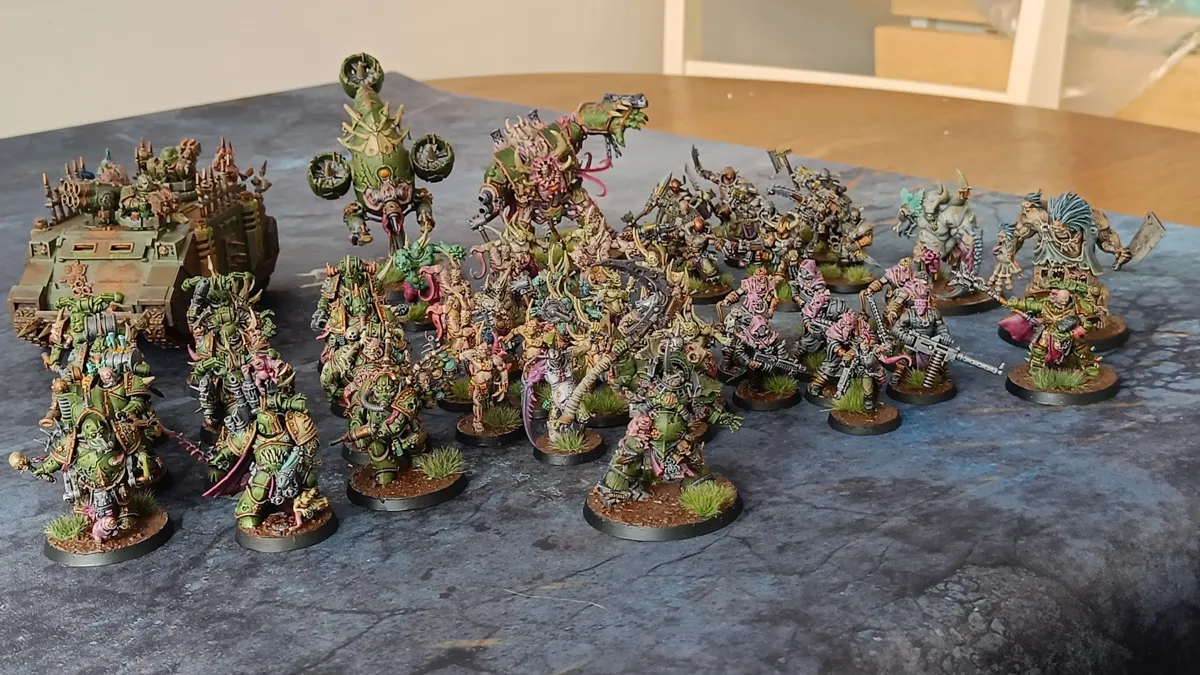
Kill Team
Kill Team is a skirmish game set in the same universe as 40k, where each player controls a small, elite squad on a compact board. Games are short and you only need a few models, which makes it a friendly place to start.
Age of Sigmar and Spearhead
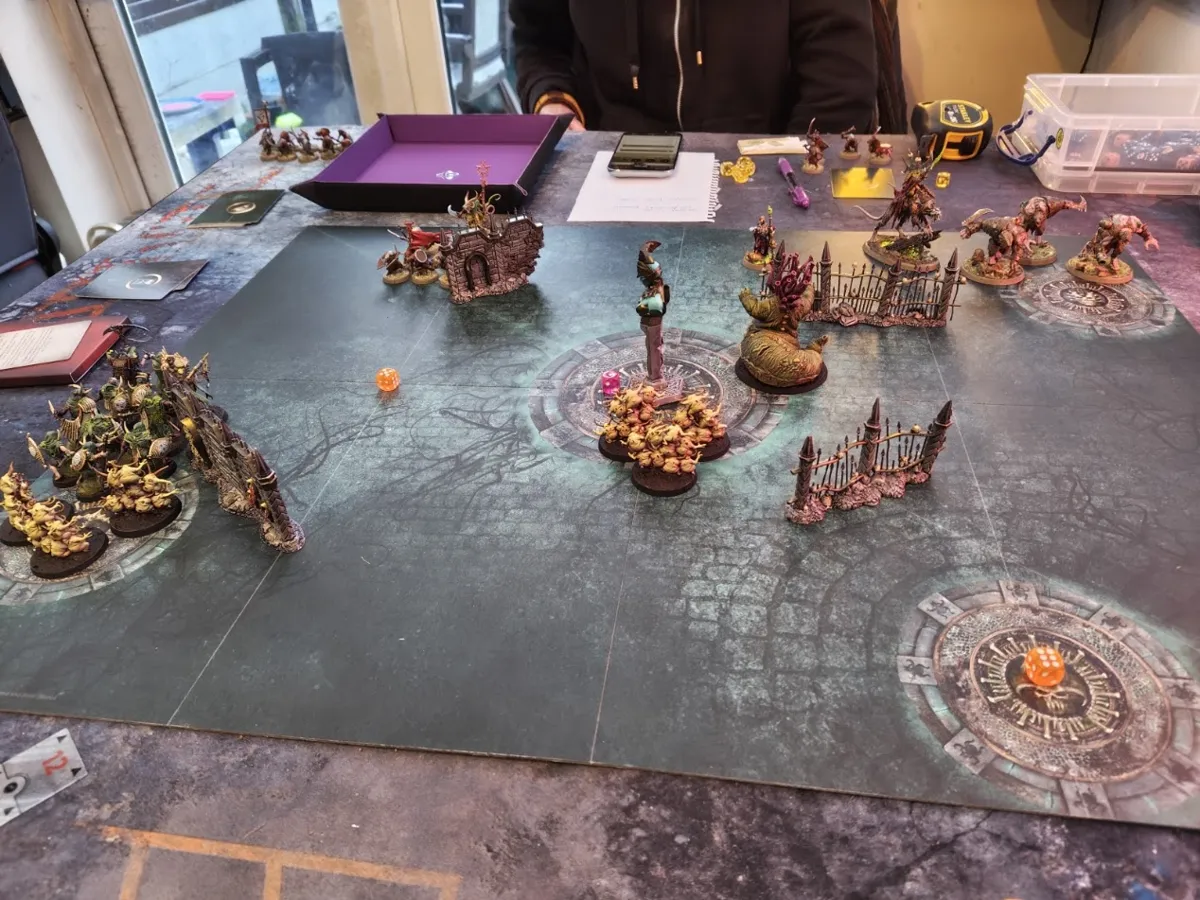
Age of Sigmar is the fantasy game. Its fourth edition began in 2024 with the Skaventide box. Spearhead is a faster mode within Age of Sigmar. Each player uses a single Spearhead box for their army, so you can be playing complete games with very little to buy or build.
The Old World and The Horus Heresy
The Old World brings back classic rank-and-file fantasy battles and a new Chaos core set for it was revealed in summer 2026. The Horus Heresy moved to a new edition in 2025. Both are rewarding, but most newcomers start with one of the games above and branch out later.
What you need to start
Here is a simple shopping list for your first army:
- Models. A starter set or a small box for one faction. The new 40k edition has three tiers of starter box, all with Space Marines and Orks. The Introductory Set (RRP £47) has 12 push-fit models, six paints, a brush, dice, a mat, card terrain and a handbook. Two Getting Started sets (RRP £105 each) give you one faction each with matching paints. The Starter Set (RRP £155) has two full Combat Patrol forces, plastic terrain, the core rules and dice.
- Clippers. Plastic cutters for removing parts from the frame cleanly.
- Glue, if needed. Many beginner kits are push-fit, while larger kits need plastic glue.
- Primer, paints and a brush. Warhammer’s own range is now called Warhammer Colour, and the new Warhammer Tone Pro paints arrive in stores in October 2026. Any decent hobby paints will do.
- Six-sided dice and a tape measure. Distances in Warhammer are measured in inches.
- The rules. Core rules for the main games are free to download from Warhammer Community, and the official apps hold the rules for your units.
Starter sets usually include dice, a range ruler and a rulebook, so check what is in the box before buying extras. If you would like to learn to paint at home, the free Warhammer Academy website has step-by-step guides for beginners.
How a game works
Every Warhammer game follows the same broad pattern.
- Agree a size. Each unit has a points value, and both players bring armies of a similar total. For example, you might each bring 1,000 points. Smaller games are a comfortable way to learn.
- Set up the battlefield. Place scenery and choose a mission, which tells you how to score.
- Take turns. In your turn you move your units, shoot at enemy units and charge into close combat. Each of these steps is called a phase.
- Roll dice. Your unit’s profile tells you what number you need on a six-sided die to hit, to wound and to save. Lots of dice are rolled at once, which is part of the fun.
- Score objectives. Most missions reward holding key areas of the table rather than simply wiping out the enemy. In the new 40k edition, objectives are areas of terrain rather than round markers.
Your first games will be slower while you look things up, and that is completely normal. Experienced players are used to helping newcomers through the rules.
Playing at home first
You can start without a store or a club. Plenty of players learn at home with a friend, and our reviewer Matt plays most of his Warhammer around the kitchen table. It is a relaxed way to learn the rules at your own pace.
- A table and a mat. A kitchen or dining table works well. The Introductory Set comes with a mat and card terrain, and a few books or boxes make good stand-in scenery until you collect more.
- Two forces from one box. The Starter Set holds two full Combat Patrol forces, so one purchase gives two people an army each. Spearhead works the same way for Age of Sigmar, with one box per player.
- Keep games small. A Combat Patrol or Spearhead game fits on a normal table and finishes in an evening, which suits busy weeknights.
- Paint between games. Home play gives you a reason to finish a unit before the next game, and painting alongside a friend is part of the fun.
When you want new opponents, bigger games or a campaign, a store or club is the natural next step.
Where to play in the UK
Warhammer stores
Warhammer stores are run by Games Workshop and are designed to welcome beginners. From 10 October 2026, stores offer a staff-led activity where you can build or paint one of eight miniatures, four from Warhammer 40,000 and four from Age of Sigmar, and learn about those factions. This replaced the long-running free Miniature of the Month, which ended in September 2026. If you bring a friend, they can also pick up a miniature, get a painting tutorial and play an introductory game of 40k or Age of Sigmar.
Stores also run Battle Honours, a programme of hands-on activities covering the three parts of the hobby: building, painting and playing. Opening times and gaming evenings vary from store to store, so check your local store before you travel.
Independent shops and clubs
Plenty of independent game shops stock Warhammer and host regular gaming nights, often with tables and scenery you can use. Clubs meet in shops, community halls and pubs, and many run leagues and campaigns that suit newcomers.
You can browse venues on our Warhammer page or go straight to cities such as Birmingham, Southampton and Exeter. For dates, the Birmingham events calendar lists regular nights in one place.
What a gaming night is like
A typical evening at a UK shop has several tables of games running at once, with players chatting and wandering over to watch. Across the Warhammer nights we list, 6pm is the most common start. Some venues ask you to book a table in advance, and those that charge usually ask a few pounds (around £5 is typical), so read the venue’s listing first. Arriving a little early gives you time to set up and say hello.
Table etiquette
A few habits make games enjoyable for everyone:
- Talk before you play. Agree the game size, mission and anything you are unsure of.
- Be clear about your models. If a model stands in for something else (a proxy), tell your opponent what it represents. Events usually expect models to show the weapons they are using.
- Roll openly. Roll where your opponent can see, and leave the dice until you have both read them.
- Check event rules. Tournaments and organised events often ask for painted armies, so read the event pack.
- Tidy up. Return scenery and clear the table when you finish.
Your first night checklist
- Pick a venue and check its opening times and gaming nights
- Book a table if the venue asks you to
- Bring your models, dice and a tape measure (or ask to borrow some)
- Have the rules for your units on your phone or on paper
- Tell people you are new; they will slow down and explain things
- Enjoy the game and ask lots of questions
If you also enjoy storytelling games, our guide on how to find a D&D group is a good next read.
Common questions
Which Warhammer game is best for beginners?
Warhammer 40,000 and Age of Sigmar are the two games you will find played most widely, so they are the easiest to get a game of locally. If you would like something smaller, Kill Team (sci-fi) and Spearhead (fantasy) use a handful of models and play quickly. Pick the setting and models you like the look of most.
What edition of Warhammer 40,000 is current?
A new edition of Warhammer 40,000 launched in summer 2026 with the Armageddon boxed set, which pits Space Marines against Orks. Games Workshop has said existing codexes and faction rules carry on working in the new edition, so older army books still have a use.
Do I need to paint my models to play?
For casual games at a store or club you can play with unpainted models while you learn. Painting is a big part of the hobby and many people enjoy it as much as playing, but there is no rush. Some organised events ask for painted armies, so read the event details before you sign up.
Can I just walk into a Warhammer store?
Yes. Staff in Warhammer stores are there to help newcomers, and from October 2026 stores run a staff-led activity where you build or paint a miniature from one of eight factions. You can also ask about an introductory game of Warhammer 40,000 or Age of Sigmar.
Do I need glue to build Warhammer models?
Many beginner kits are push-fit, so the parts clip together without glue. Larger or more detailed kits usually need plastic glue. Check the box or ask in store before you start.